10 Essential Tips for Choosing the Right Polymer Film for Your Needs?
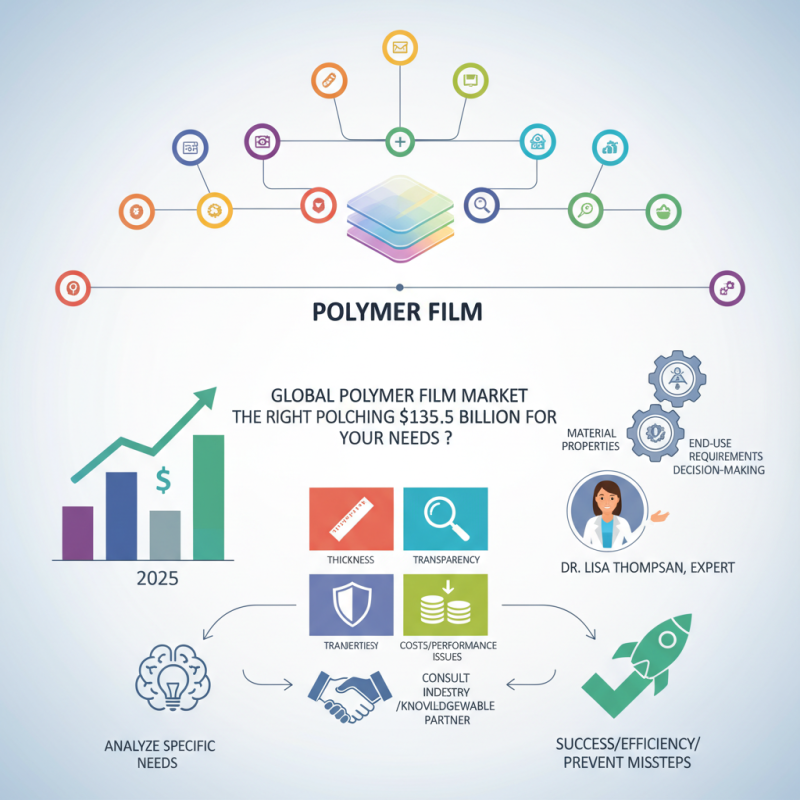
Choosing the right polymer film can be a game-changer for many industries. According to a recent report by MarketsandMarkets, the global polymer film market is expected to reach $135.5 billion by 2025, highlighting its significance. With multiple applications ranging from packaging to medical uses, the choices can be overwhelming.
Expert in the field, Dr. Lisa Thompson, states, “Selecting the proper polymer film requires an understanding of material properties and end-use requirements.” This underscores the importance of informed decision-making. Factors like thickness, transparency, and barrier properties are crucial. Yet, businesses often overlook these details. Failure to choose wisely may lead to performance issues or increased costs.
Marketers or designers should analyze their specific needs carefully. Industry standards are evolving, making consultation a smart move. A knowledgeable partner can provide insights into the best options. Ultimately, understanding the nuances of polymer film can prevent missteps and promote efficiency. Selecting the right film is not just important; it is essential for success.
Understanding Different Types of Polymer Films and Their Applications
When selecting the right polymer film, understanding the different types is crucial. Each polymer film has unique properties and applications. For instance, polyethylene films are widely used for packaging due to their flexibility and moisture resistance. They can be found in grocery bags and food wraps. On the other hand, polypropylene films are excellent for labels and tapes, providing better clarity and sturdiness.
Consider the application before choosing a polymer film. Some films offer UV protection, which is essential for outdoor use. In contrast, films designed for print applications require specific surface treatments. Reflecting on your needs might help identify the best fit. Sometimes, a film that looks perfect on paper may not perform as expected in real-world conditions.
Experimentation can be a valuable approach. Testing different types of films in small projects can reveal their strengths and weaknesses. Be open to facing challenges, like adhesion issues or compatibility with other materials. This hands-on experience can be enlightening, guiding you to make more informed choices in the future.
Identifying Key Performance Characteristics of Polymer Films for Specific Uses
When selecting the right polymer film, it's vital to understand its key performance characteristics. These characteristics can significantly affect the final application. Mechanical strength, flexibility, and chemical resistance are crucial for many industrial uses. A report from the European Polymer Journal indicates that films with high tensile strength are critical for packaging applications, ensuring durability during transport and storage.
In addition, the permeability of polymer films can influence their suitability for various applications. Films with low oxygen transmission rates are essential for food packaging. According to a study by the Institute of Food Technologists, films with oxygen barrier properties can extend the shelf life of perishable items by up to 50%. On the other hand, thermal stability is important in applications involving heat exposure. Choosing a film that can withstand specific temperature ranges enhances performance.
It’s not just about picking a film; it’s about choosing the right one for your unique needs. This process can often feel overwhelming. Some may underestimate the importance of testing molecular weight and additives in the polymer. Without thorough evaluation, the chosen film could compromise the product's integrity. As industries evolve, staying updated on polymer advances is essential. This ensures the best choice for your specific application, guiding you toward better efficiency and performance.
Performance Characteristics of Different Polymer Films
This chart illustrates the tensile strength and elongation at break of various polymer films. It highlights the essential performance characteristics that are crucial when selecting a polymer film for specific applications.
Assessing Environmental Resistance and Durability of Polymer Films
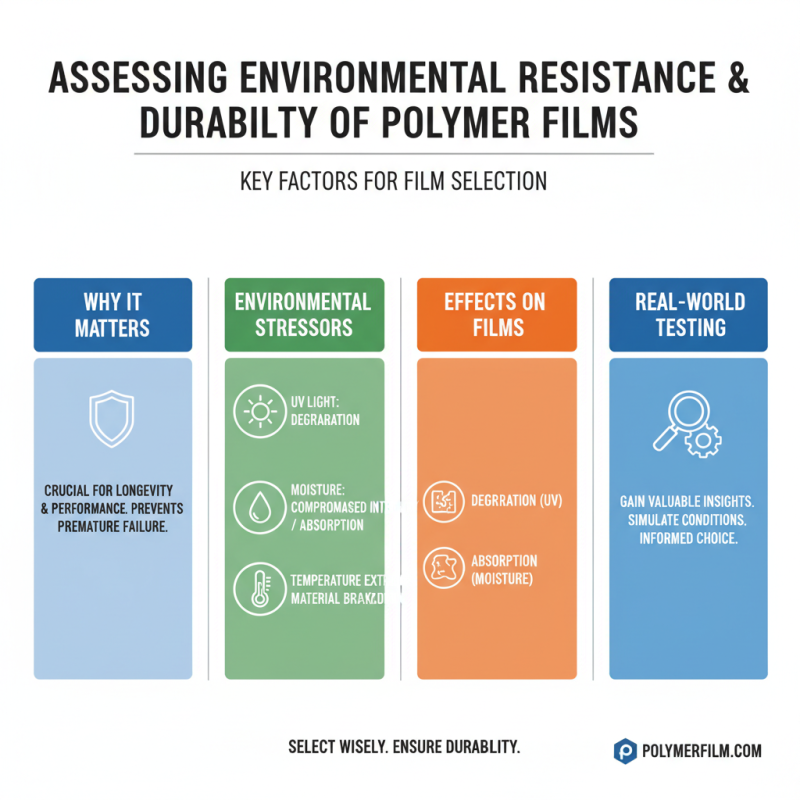
When selecting a polymer film, environmental resistance is crucial. Evaluating how a film reacts to elements like moisture, UV light, and temperature extremes can guide your choice. For instance, some films may degrade quickly under UV exposure. Others could absorb moisture, leading to compromised integrity. Testing in real-world conditions can provide valuable insights.
Durability is another key factor. A durable film stands strong against physical stresses. Look for films that resist tearing and puncturing. The thickness of the film often correlates with its strength. However, thicker films can be less flexible. Balancing flexibility and strength can be challenging. It's important to assess your specific needs and conditions thoroughly.
Consider asking experts about their experiences with various films. Industry standards can provide benchmarks but may not account for all scenarios. Real-world feedback often reveals the nuances of durability and resistance that specifications do not. This reflection can improve your understanding and lead to better choices in the long run.
Evaluating Cost-Effectiveness and Availability of Polymer Films
When selecting polymer films, cost-effectiveness and availability are critical factors. According to a recent market analysis, the global polymer films market is expected to reach $40.98 billion by 2028. This growth indicates an increasing demand for various applications, from packaging to medical uses. Cost-effectiveness does not solely reflect the price; it also encompasses factors like durability and performance. Research shows that films with higher performance can reduce long-term costs, even if initial prices are higher.
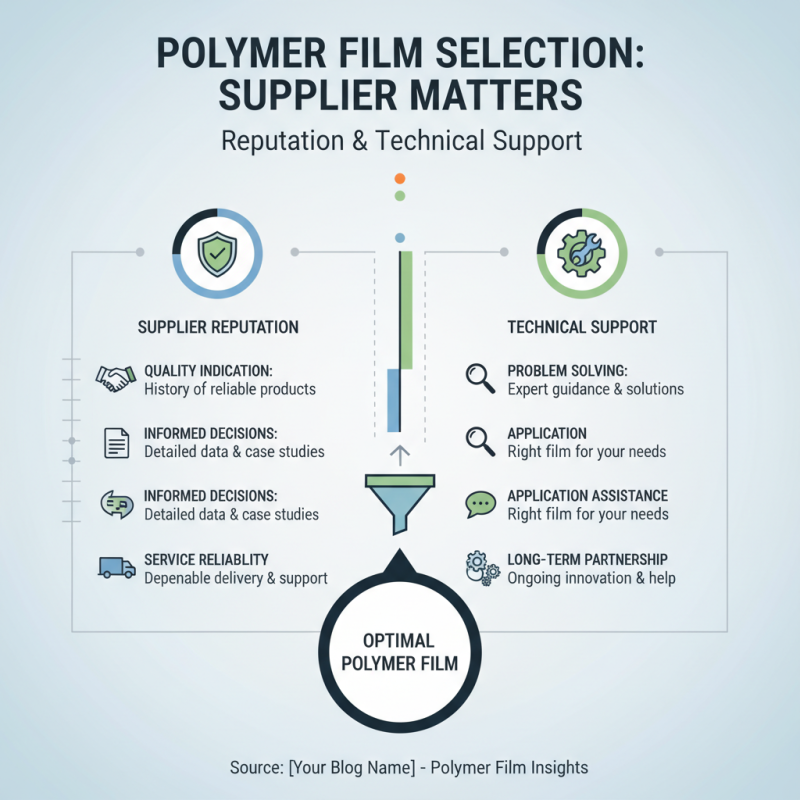
Evaluate suppliers based on their inventory and delivery options. A diverse availability ensures that you can obtain the polymer films when needed. The choice of supplier matters; some companies may have better stock and faster turnaround times. A study reveals that around 30% of manufacturers reported delays due to insufficient supply chains.
Tip: Always compare materials and their applications. Some films perform better, thus offering greater value. Consider the life cycle of the film to understand its long-term cost benefits.
Additionally, assess the environmental impact of polymer films. Sustainable options might have a higher upfront cost but can lead to savings in disposal and regulatory compliance. Balancing cost with sustainability is essential in today's market.
Tip: Investigate the material properties of the films. Understanding tensile strength and heat resistance will ensure that you choose wisely.
10 Essential Tips for Choosing the Right Polymer Film for Your Needs
| Type of Polymer Film |
Cost per Square Meter ($) |
Thickness (µm) |
UV Resistance (Hours) |
Temperature Range (°C) |
Availability (Lead Time Days) |
| Polyethylene (PE) |
$1.50 |
50 |
1000 |
-50 to 80 |
10 |
| Polyvinyl Chloride (PVC) |
$2.00 |
75 |
800 |
-10 to 60 |
15 |
| Polypropylene (PP) |
$1.80 |
100 |
900 |
-20 to 100 |
7 |
| Polyester (PET) |
$2.50 |
125 |
1000 |
-30 to 200 |
20 |
| Nylon (PA) |
$3.00 |
200 |
1200 |
-40 to 120 |
25 |

 1Durch die gruppenweite Einführung und Harmonisierung unseres integrierten Managementsystems (IMS) werden alle bestehenden Unternehmens-, Qualitäts-, Umwelt- und Energiepolitiken durch diese Unternehmenspolitik ersetzt. Der Slogan „Textil hat Zukunft – auch in De