Why Choose PETG Sheet for Your Next Project?
When considering materials for your next project, the choice of a PETG sheet is crucial. This versatile thermoplastic offers unique advantages that deserve attention. Whether you are designing products or creating prototypes, understanding the features of PETG can significantly impact your results.
PETG sheets are known for their excellent clarity and strength. They are easy to work with and can be easily thermoformed, making them ideal for various applications. Many professionals appreciate their resistance to impact and UV light. However, it is essential to recognize that this material may not be suitable for heavy structural applications.
Using PETG sheets requires careful consideration. While they are widely compatible with many processes, their temperature resistance is not as high as some alternatives. It is essential to weigh these factors against your project needs. Exploring the potential of PETG sheets can lead to impressive results, but be sure to assess any limitations.
Key Properties of PETG Sheets for Various Applications
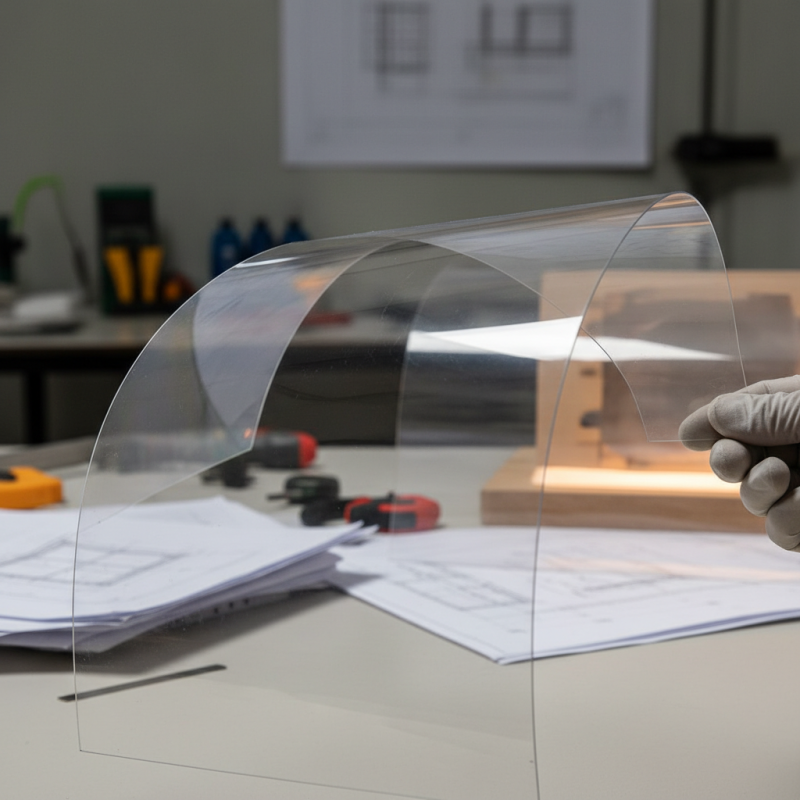
PETG sheets are becoming popular in many industries due to their unique properties. These sheets offer excellent clarity, making them ideal for displays and signs. Their transparency can rival that of glass. In applications where visibility is crucial, PETG stands out.
Another significant advantage is their durability. PETG sheets are impact-resistant, making them suitable for protective coverings. They withstand daily wear and tear better than many alternatives. However, this strength may tempt users to overlook proper handling. Scratches can still occur if not cared for.
Moreover, PETG sheets are easy to process. They can be cut, drilled, and shaped without compromising their integrity. This quality offers versatility for various projects. Yet, despite their adaptability, some may struggle with achieving perfect finishing touches. Mastering the techniques can be challenging. Having the right tools and practice is essential. Proper education on how to use PETG effectively can alleviate these issues and enhance project outcomes.
Advantages of Using PETG Sheets Over Other Materials
PETG sheets are gaining popularity in various industries due to their unique advantages. Unlike acrylic, PETG is more impact-resistant, making it a safer option for applications that require durability. According to a report by the Plastics Industry Association, PETG's impact strength can be up to 5 times greater than that of glass and acrylic sheets, making it ideal for high-stress environments. This durability reduces the risk of breakage, ensuring longer-lasting projects.
Additionally, PETG offers excellent clarity and transparency, comparable to polycarbonate. It allows up to 90% light transmission, which is crucial for displays and signage. Many designers appreciate this property because it enhances aesthetic appeal while maintaining functionality. However, it is worth noting that PETG can be more challenging to thermoform than its counterparts, as it requires careful temperature management.
Tip: When working with PETG sheets, maintain a consistent temperature to achieve the best results. Rapid cooling may distort the shape.
Another significant benefit is PETG's chemical resistance. It withstands a range of substances, including various solvents. This attribute makes it suitable for applications in healthcare and laboratories. However, some users have reported that prolonged exposure to certain chemicals can still affect its integrity, prompting a need for careful selection of usage contexts.
Tip: Always perform a compatibility test before exposing PETG to harsh chemicals. This approach can save time and resources in the long run.
Why Choose PETG Sheet for Your Next Project? - Advantages of Using PETG Sheets Over Other Materials
| Property |
PETG Sheets |
Acrylic |
Polycarbonate |
| Clarity |
High transparency (90% light transmission) |
Excellent clarity but slightly less than PETG |
Very clear but can yellow over time |
| Impact Resistance |
Good impact resistance |
Very high impact resistance |
Exceptional impact resistance |
| Flexibility |
Moderate flexibility |
Less flexible, more rigid |
High flexibility |
| Chemical Resistance |
Good resistance to acids and bases |
Moderate chemical resistance |
Excellent chemical resistance |
| Temperature Resistance |
Up to 70°C (158°F) |
Up to 90°C (194°F) |
Up to 125°C (257°F) |
| Ease of Fabrication |
Easily thermoformed and CNC machined |
Can be challenging to work with |
Easy to fabricate but can shatter |
| Weight |
Lightweight |
Also lightweight |
Generally heavier |
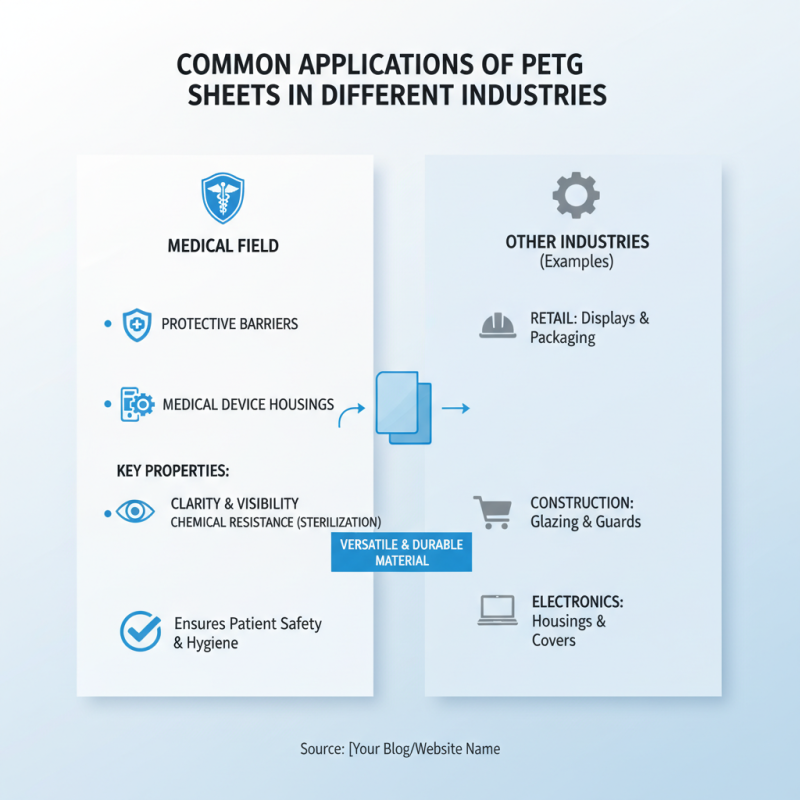
Common Applications of PETG Sheets in Different Industries
PETG sheets have gained traction in various industries due to their versatility and durability. In the medical field, these sheets are often used for protective barriers and medical device housings. Their clarity is essential for visibility and safety. PETG offers chemical resistance, making it ideal for sterilization processes. This adaptability shows its significant role in ensuring patient safety and hygiene.
In the packaging industry, PETG sheets excel in creating rigid packaging solutions. Their excellent impact resistance helps protect fragile items during shipping. They can be easily thermoformed into unique shapes, providing optimal branding opportunities. However, designers may face challenges in achieving perfect clarity during complex shapes. This highlights the need for careful fabrication and quality control.
Other applications include automotive and consumer goods. PETG’s light weight and strength make it suitable for interior car parts and durable household items. These sheets can be designed to meet aesthetic preferences while maintaining functionality. Despite its benefits, improper handling can lead to scratches or surface imperfections, calling for better training in processing techniques. This balance of pros and cons informs decisions when choosing materials for specific projects.
Factors to Consider When Choosing PETG Sheets for Your Project
When selecting PETG sheets for a project, it’s vital to consider various factors to ensure the material meets specific needs. PETG, or Polyethylene Terephthalate Glycol, is known for its excellent clarity and impact resistance. According to a 2021 market report, the global demand for PETG sheets has grown significantly, driven by industries like packaging and signage. The properties of PETG make it a preferred choice for applications requiring durability and visual appeal.
Another important factor is temperature resistance. PETG can withstand temperatures ranging from -40°C to 70°C. This range makes it suitable for both indoor and outdoor applications. However, prolonged exposure to high heat can deform PETG. A 2022 study highlighted that while PETG exhibits great flexibility, its resistance to extreme environments is not infallible. Understanding these limits is crucial for project success.
Lastly, the ease of fabrication plays a critical role in the decision-making process. PETG sheets can be easily cut, sawed, and thermoformed, making them user-friendly. However, improper handling can lead to scratches or surface damage. Experts recommend utilizing protective films during handling. Such precautions help maintain the material's integrity, as noted in several industry reports on best practices for PETG use. Balancing these factors will help ensure project results align with expectations.
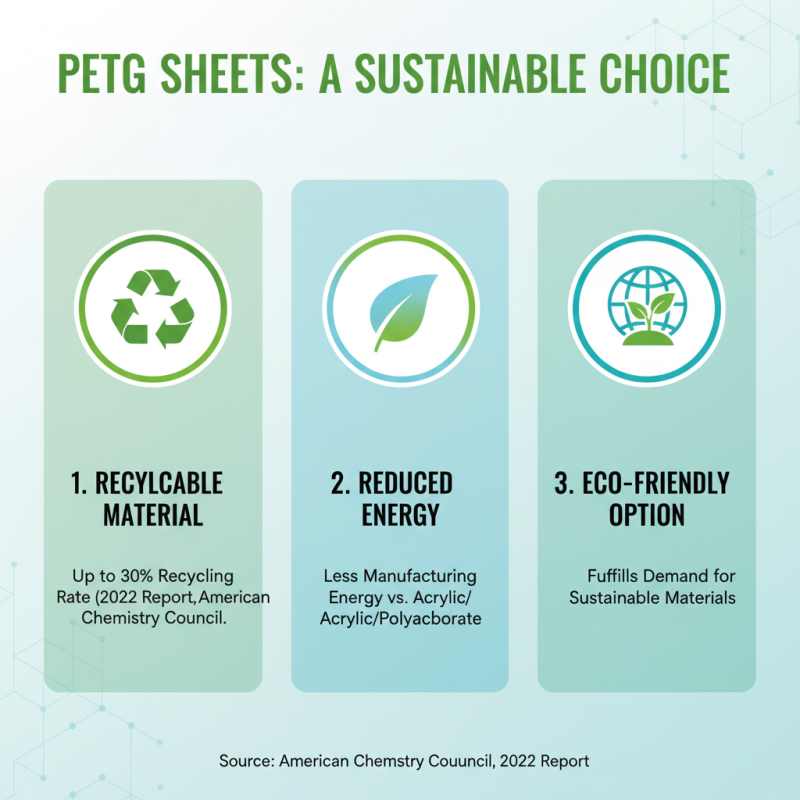
Sustainable Aspects of PETG Sheets and Environmental Impact
In recent years, the demand for sustainable materials has surged in various industries. PETG sheets stand out due to their favorable environmental properties. This thermoplastic is not only recyclable but also made from materials that require less energy to produce compared to alternatives like acrylic or polycarbonate. According to a 2022 report by the American Chemistry Council, recycling rates for PETG can reach up to 30%, making it a more eco-friendly option.
PETG sheets exhibit lower volatile organic compounds (VOCs). This characteristic minimizes harmful emissions during the production process and in end-use applications. A study from the European Commission highlighted that materials with low VOC emissions can significantly impact indoor air quality. While PETG is not entirely biodegradable, its recyclability allows for a reduced environmental footprint when reused correctly.
However, it is essential to consider challenges. Not all facilities recycle PETG, and contamination can hinder proper processing. The industry must improve recycling programs to enhance PETG’s sustainability. Awareness and education around proper disposal methods are also lacking. This gap poses a hurdle for achieving optimal environmental benefits from this material. Continuously innovating and addressing these challenges will enhance PETG's position as a sustainable choice in future projects.

 1Durch die gruppenweite Einführung und Harmonisierung unseres integrierten Managementsystems (IMS) werden alle bestehenden Unternehmens-, Qualitäts-, Umwelt- und Energiepolitiken durch diese Unternehmenspolitik ersetzt. Der Slogan „Textil hat Zukunft – auch in De